
Very few of us are what we seem
Agathe Christie
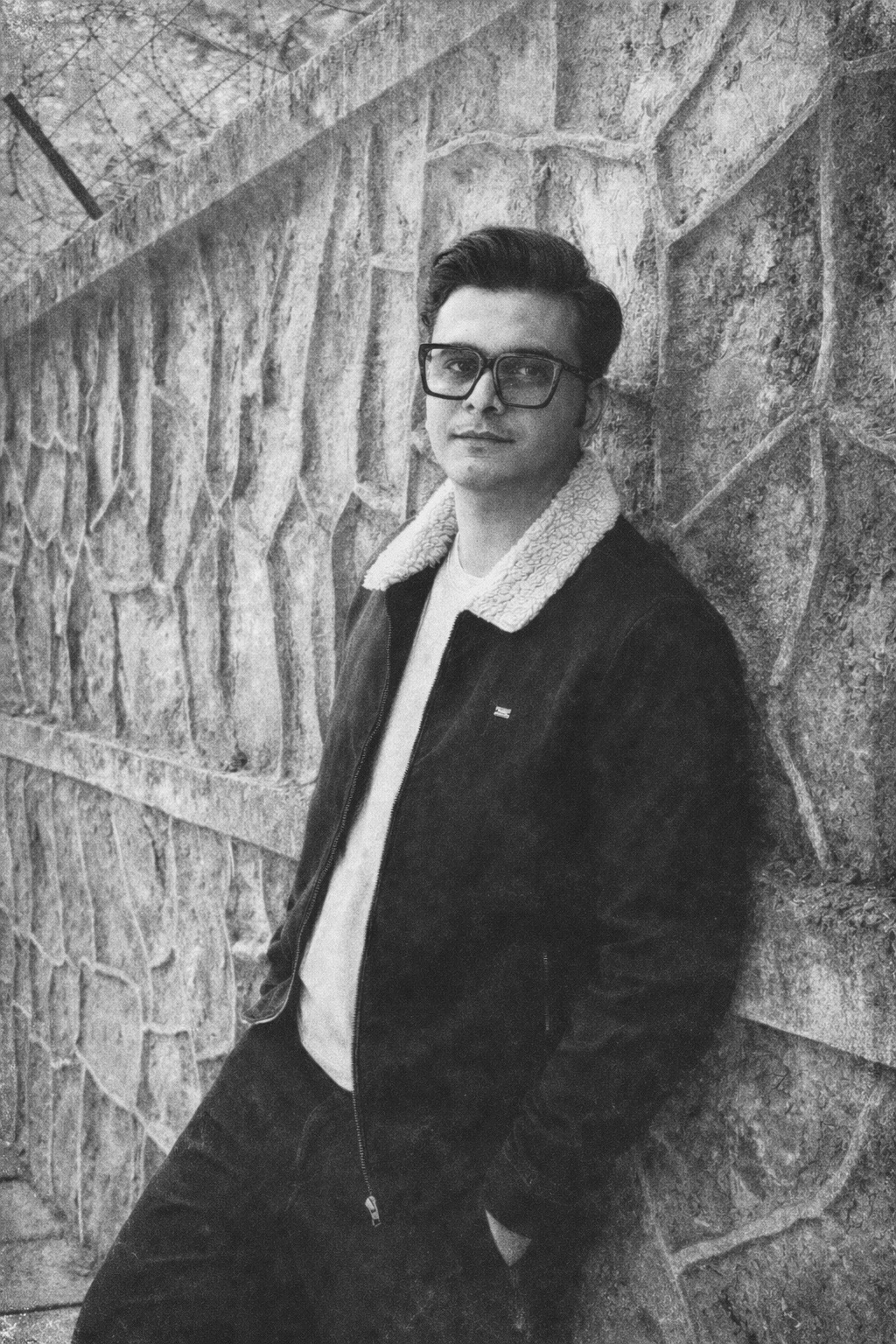
The most powerful thing about being a writer is the ability to turn emotions into words that stay with people long after the last page is turned. Vedant Saxena is one such name that has steadily made his place in the literary space. Known for his bestselling debut novel Will You Stay?, which also won the CLA Award for Most Promising Romance Book, he writes stories that explore love, heartbreak, mental health, and the slow process of healing in a way that feels deeply personal and relatable.
Vedant Saxena’s journey into writing is anything but conventional. With a background in hotel management and early experience at Le Méridien, New Delhi, he chose to step away from a structured career path to pursue storytelling as a way to explore and express human emotions. This decision reflects deeply in his work, where honesty and emotional depth remain at the core of his writing.
An award-winning and bestselling author, Vedant is known for crafting psychologically rich and emotionally resonant stories. As a psychology research scholar and counselling psychologist, he draws from his academic insights and therapeutic experience to create narratives that feel authentic, layered, and deeply human.
His books have reached readers across countries, building a strong connection with a generation that finds comfort and understanding in his words. Beyond writing, he actively engages with his audience through social media – sharing thoughts, poetry, and conversations around emotional well-being and self-growth.
Alongside his literary work, Vedant is also a brand storyteller and communication specialist. He creates narratives that are both compelling and uplifting, blending strategic communication with storytelling to inspire, connect, and leave a lasting impact. Step into the world of a writer whose stories are not just read, but felt—and whose words continue to stay with readers long after the last page.
Personal Journey
- Your journey from being a hotelier to becoming a writer is fascinating. What was the key turning point in this transition?
It wasn’t a single dramatic moment, but rather a gradual realization. Hospitality taught me a lot discipline, structure, and how to understand people at a surface level. But somewhere within that routine, I felt a growing disconnect. I was functioning, but I wasn’t fully expressing myself.
The turning point came when writing stopped being something I liked and became something I needed. I began writing not for an audience, but as a way to process what I was feeling and observing. And the more I wrote, the clearer it became that this wasn’t just an interest it was where I felt most honest, most alive. Of course, the shift wasn’t easy. Walking away from a stable path into something uncertain comes with fear, doubt, and many unanswered questions. But at some point, I had to choose between comfort and authenticity. And I chose authenticity. Looking back, it doesn’t feel like I left one career for another. It feels like I finally stepped into who I was always becoming.
About Writing & Creative Process
- As a renowned mental health advocate, do you find it easier to articulate emotions and feelings, given that you’ve written extensively around this theme?
I wouldn’t say it gets easier. Yes, I’ve spent years advocating for mental health. I’ve been counselling people for the past five years, and now I’m pursuing a PhD in psychology. On the surface, it may seem like articulating emotions should come naturally to me.
But the truth is it doesn’t come easily. If anything, it takes more from me. Being an empath means I don’t just understand emotions, I feel them deeply. Every story I listen to, every pain I sit with, leaves something behind. And when I write about these experiences, I’m not just expressing thoughts I’m revisiting emotions, both theirs and my own.
It takes a toll on me. There are moments when writing feels heavy, when I have to pause and gather myself again not as a professional, but simply as a human being. And yet, I continue. Because if those of us who can understand and articulate these emotions choose not to, then who will? It may not be easy but it is necessary.
- You’ve already achieved the milestone of becoming a bestselling author, something many writers aspire to. When you begin a new book, what vision guides you?
Whenever I pick up a new story, it is always a completely fresh beginning for me. Becoming a bestselling author doesn’t change that. It doesn’t make the process easier, nor does it give me a formula to follow. Every story comes with its own emotions, its own challenges, and its own voice waiting to be discovered.
I always begin with enthusiasm, and with a sense of curiosity, almost like I’m meeting the story for the first time and allowing it to unfold rather than forcing it into a structure. What guides me is not the pressure of success, but the intention to tell something honest. I don’t chase expectations; I try to stay true to the feeling the story carries. If it moves me, if it unsettles me, if it stays with me even after I step away from it, only then do I know I’m on the right path.
For me, writing has never been about repeating success. It’s about rediscovering myself through every new story. And that’s what keeps it alive.
- Is there any part of the publishing process that still makes you nervous, even after all your experience?
Pitching a manuscript to a publisher. It’s a strange kind of vulnerability. You’ve lived with a story for so long, poured your thoughts, emotions, and time into it… and then you place it in someone else’s hands, wondering—will they see what I see?
Will they feel the same magic?
That uncertainty never really goes away. No matter how much experience you have, every story feels personal, and with that comes the fear that it won’t be understood the way you intended. But I’ve also come to realize that this nervousness is a good sign. It means I still care deeply. It means the story still matters to me.
And maybe that’s exactly how it should be.
- How is the book you’re currently working on different from your previous works, especially from a reader’s perspective?
The book I’m currently working on is very different from my previous works especially from a reader’s perspective. Most of my earlier writing leans into introspection and emotional depth in a more reflective, philosophical way. But this story pulls the reader into something far more immediate – more intense, more gripping.
It’s a story you experience. From the very beginning, there’s a sense of unease. The narrative moves between psychological tension and emotional vulnerability, constantly blurring the line between what is real and what is perceived. As a reader, you’re not just observing the character—you’re inside their mind, questioning everything alongside them.
What makes it different is the pace and the stakes. It holds you, unsettles you, and keeps revealing layers you didn’t expect. There’s pain, there’s mystery, and there’s a deeper exploration of survival not just physical, but emotional and psychological. I think readers will feel more involved in this one. It demands attention, it demands presence. And by the end, it leaves you with questions that don’t fade easily. It’s darker. It’s more immersive. And in many ways, it’s the most raw story I’ve written so far.
Mental Health & Society
- Why do you think mental health is still considered a taboo topic, and what do you think encourages people to open up and start conversations around it?
Mental health is still considered a taboo topic largely because it asks people to confront parts of themselves they’ve been taught to hide. For generations, we’ve been conditioned to associate strength with silence to “deal with it,” to move on, to not burden others with what we feel. Emotions like anxiety, grief, or vulnerability are often misunderstood as weakness rather than what they truly are human experiences.
But what encourages people to open up is something very simple, yet very powerful safe spaces. When someone feels heard without being judged, when they see others speaking openly about their struggles, it creates permission. It tells them, “You’re not alone. It’s okay to feel this way.” I’ve seen this firsthand in my counselling work. The moment people realise they don’t have to pretend anymore, something shifts. Conversations begin. Healing begins. I believe change doesn’t come from forcing people to speak, it comes from making it safe enough for them to want to.
Benazir Mungloo| A Voice That Echoes Beyond Pages
Advice for Emerging Writers
- Vedant, many emerging writers often wonder how to find the right publisher. Along with that, how can they manage pacing and enrich their writing throughout the process?
Finding the right publisher and refining your writing are both journeys in themselves, and they require patience as much as skill. When it comes to publishers, the focus shouldn’t just be on finding the right fit. Every publisher has a voice, a kind of story they resonate with. Take the time to research, understand their catalogue, and see where your work naturally belongs. And most importantly, don’t rush the process. Rejections are not always a reflection of your writing, they’re often about alignment.
As for pacing and enriching your writing, that comes from learning to sit with your story. Don’t be in a hurry to finish. Let the narrative breathe. Some parts need slowing down where emotions deepen, where characters unfold. Others need movement. The balance comes with rewriting, not just writing. If you stay patient with both the process and yourself, the right publisher and the right voice will find you eventually.
Reader Connection
- I’ve read Will You Stay, and I truly loved it and it left a lasting impact on how I perceive emotions and relationships. What are the chances of getting a signed copy of your upcoming book?
That’s really nice of you. You will certainly get a signed copy of my next.
- Are there any plans for signed copy giveaways, book tours, or conferences that readers and fans can look forward to?
We are definitely planning to do that.
A big thank you to Vedant Saxena for taking the time to share his journey and thoughts with us. Wishing him all the very best for his future projects and continued success in touching hearts with his words. And of course, I’ll be waiting for my signed copy!
You can follow Vedant and stay updated with his work here:
- Instagram: Vedant_thereal
- Twitter: @Vedant_thereal
Check out his books here:
- Will You Stay? — Amazon link
- If I Could Remember — Amazon link
Dive into his stories and let his words stay with you long after the last page is turned.
Subscribe to get glimpse of literary realm