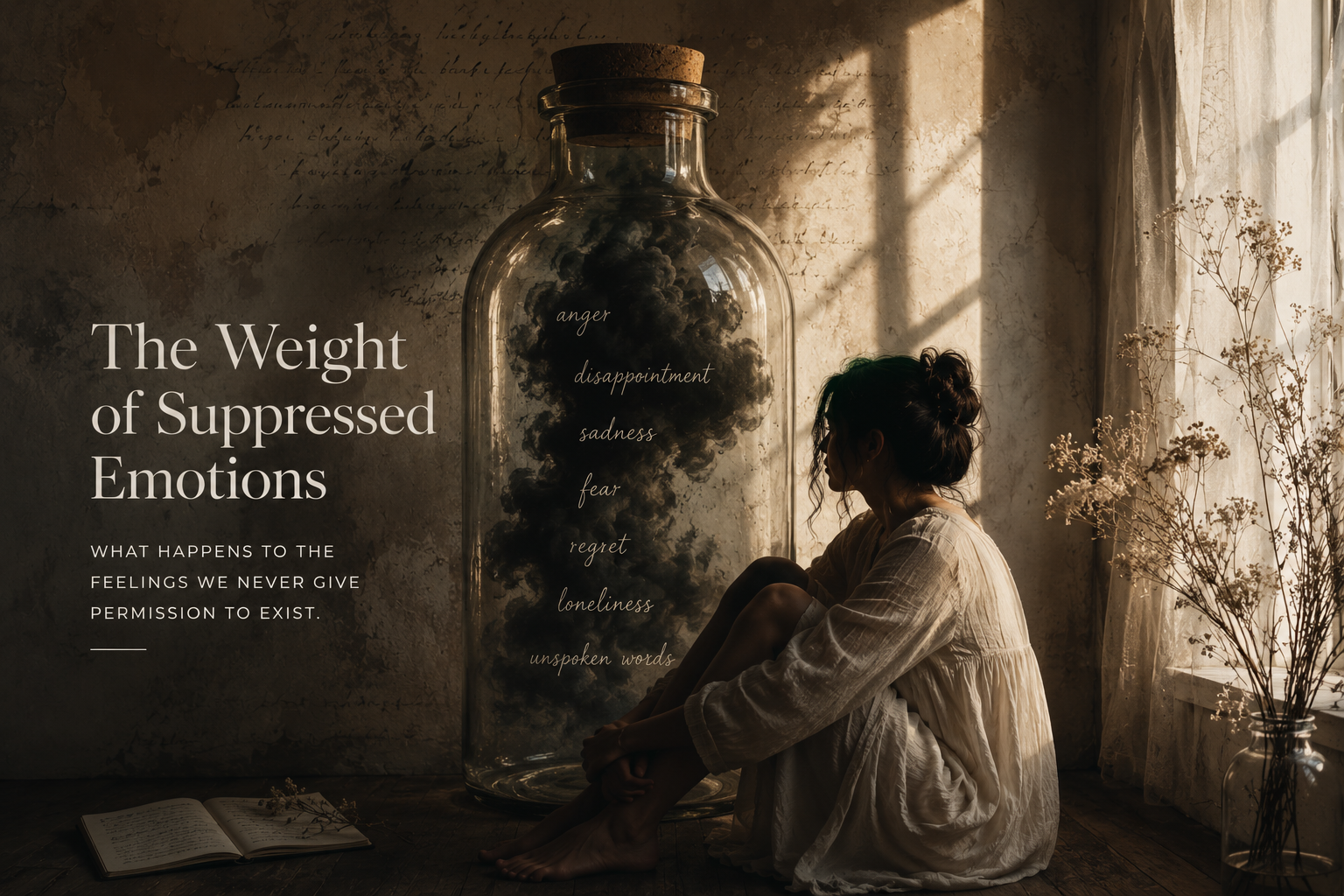

When did people learn to become digestible? It certainly isn’t something we’re born knowing. No child enters this world wondering whether their emotions are appropriate or whether crying too much will make them difficult to love. They laugh loudly, cry freely, complain when something feels unfair and ask for comfort without apologizing for needing it. Somewhere along the way, however, we begin editing ourselves. We learn which emotions are acceptable and which ones should remain hidden. It happens so gradually that we barely notice it. Before we know it, we are carefully curating versions of ourselves that are easier for the world to consume, almost as though we are trying to become paintings that everyone admires and nobody critiques..
Perhaps we are less like paintings and more like bottles. Throughout the day we keep pouring little fragments of ourselves into them. A conversation we wanted to have but didn’t. Anger that felt too inconvenient to express. Disappointment we convinced ourselves was too small to matter. Sadness that arrived at the wrong time. Every feeling is carefully stored away before we tighten the cap and move on with our day as though nothing happened.
The peculiar thing about bottles, though, is that they rarely open where they are filled. They find someone entirely different. Sometimes they burst dramatically, but more often they leak quietly through impatience, emotional distance, a sharper tone than intended or an inability to remain present. We don’t simply spill our emotions; we sprinkle them into places they never belonged, leaving the ground slippery for people who have no idea about the bottle we have been carrying all along.
I often wonder if this is how emotional suppression survives for so long. It disguises itself as maturity, patience or resilience. We admire the child who never complains because they appear uncomplicated. We praise the one who never demands too much, who adjusts easily, who is always understanding. Yet children have a peculiar habit of becoming adults. The child who masters the art of having zero complaints often grows into the adult who cannot say no without feeling guilty. Not because they agree with everything, but because disagreement has become unfamiliar territory. Pleasing others slowly stops being a choice and quietly becomes a personality.
Similarly, the child nobody ever has to worry about often becomes the adult who never asks for help. Hyper-independence begins looking like strength from the outside, but internally it often feels like carrying the weight of your life alone because somewhere along the journey vulnerability started resembling weakness.
I also think emotional patterns resemble trees we never planted ourselves. Someone else sowed the seed years ago. By the time we notice the tree, its roots have travelled too deep into the ground. Removing it no longer feels possible, yet pretending it isn’t there changes nothing either. Eventually we stop trying to cut it down and simply learn to acknowledge its presence.
Benazir Mungloo| A Voice That Echoes Beyond Pages
What surprised me most wasn’t arriving at these thoughts but discovering that psychology has been quietly exploring them for years. I remember reading research on suppressed emotions almost out of curiosity. Dr. Stephanie, among others, has extensively written about the relationship between emotional suppression and its aftermath. The research is fascinating, but it is also unsettling because it forces you to wonder how much of what your body carries was once simply an emotion asking to be acknowledged.
I’ve always believed in balancing realism with optimism. Hope is important, and so is perspective. But somewhere along the way optimism became synonymous with pretending everything is okay. It almost feels as though happiness has become the only emotion we are allowed to pursue while every other emotion is treated as something that needs immediate fixing. I often find myself asking why. Who decided that sadness was an emotion to escape from rather than understand? Who taught us that anger should immediately be replaced with gratitude before we have even figured out what boundary it was trying to protect? Every emotion exists for a reason, yet we keep assigning value to them as though happiness deserves applause while everything else deserves silence.

Perhaps we inherit emotional beliefs the same way we inherit recipes. We are served them long before we ever learn how to cook for ourselves. Familiarity is comforting, and comfort rarely encourages curiosity. The idea of suppressing emotions could very well begin here. Sometimes we remain silent because we want to keep the peace. Sometimes we convince ourselves that speaking honestly would only burden someone else. The intention is often beautiful. If intentions alone counted, many of us would deserve gold medals.
Every reflective piece somehow needs to end with a cure. Readers often reach the final paragraph hoping someone has already figured life out for them. I could tell you about the countless techniques I have read. But I don’t want you to have a cup of coffee that I prepared. I would rather you choose your own beans, grind them to the texture you enjoy and brew them in a way that feels honest to you. Healing has always seemed deeply personal. Borrowing someone else’s process may comfort you for a while, but eventually you will have to discover your own.
Still, I don’t like leaving things on a cliffhanger, so perhaps I can offer you a small taste of my coffee. Don’t suffocate yourself so that someone else can enjoy fresh air. Your emotions are not inconveniences that you need to hide before entering a room. They are reminders that you are alive, that you are affected, that you are capable of feeling deeply. Perhaps healing doesn’t begin when we finally become happier. Perhaps it begins when we stop asking our emotions to justify their existence and simply allow ourselves the grace to feel them before they quietly begin asking the body to speak on their behalf.
P.S. If this essay felt a little too familiar, perhaps there is a conversation you’ve been postponing with someone else or with yourself.
Subscribe to get glimpse of literary realm